At Just Harvest, we believe food is a human right and anyone who needs food should be able to access food assistance, regardless of immigration status. However, U.S. laws say otherwise.
New federal laws have changed eligibility rules for noncitizens receiving SNAP. The following questions can help you determine if you are still eligible to receive SNAP benefits.
As of now, your information is protected and using food assistance programs will not impact your immigration status.
Trump administration proposes changes to public charge rules. Take action here: https://pifcoalition.org/campaigns/public-charge-2025/.
Who is eligible for SNAP?
In addition to having a qualifying status, non-citizens also have to meet the same SNAP income guidelines and eligibility rules as U.S. citizens.
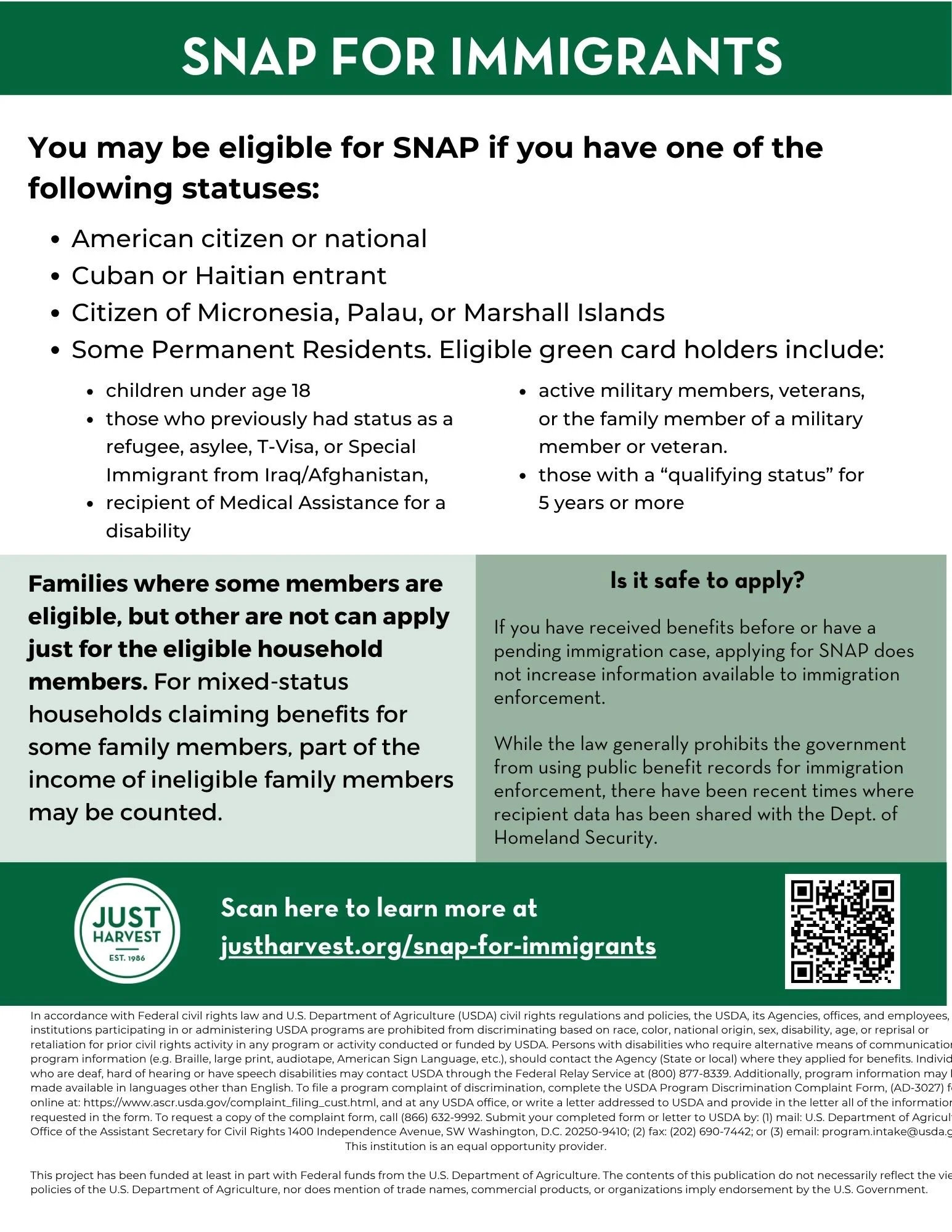
Starting November 1, 2025 only the following four statuses qualify for SNAP benefits:
-
US citizens must have or have applied for a Social Security Number to receive SNAP.
-
Lawfully Permanent residents (LPRs) are subject to having a five year waiting period unless they:
are under 18,
had previous status as a refugee, asylee, T-Visa, or Special Immigrant from Iraq/Afghanistan
are receiving Medical Assistance for a disability, OR
are in the military or a veteran or the family member of a military member or veteran.
The five year waiting period is considered met when:
Someone has had a qualifying status or combination of qualifying statuses for five years or longer. (Qualifying statuses include: LPR, refugee, asylee, parolee, and Violence Against Women Act petitioner)
Or, someone can count 40 quarters (10 years) of work history in the U.S. from themselves, their spouse, or their parents.
-
This includes people people from Cuba and Haiti who:
were granted parole to enter the U.S., even if the parole is now expired or they now have another immigration status, or
have a pending asylum application or
are in removal proceedings but do not have a final, enforceable order of removal.
Cuban/Haitian entrants do not have a five year waiting period.
-
Citizens from Federated States of Micronesia, the Republic of Palau, and the Republic of the Marshall Islands.These citizens are allowed to live and legally work in the U.S. without a visa, as well as have access to benefits provided they meet all other eligibility requirements.
Individuals from these nations do not have a five year waiting period.
What about mixed-status families?
If some members of your household are ineligible non-citizens, you may still be able to apply for eligible members of your household. However, your household benefits will be calculated based on the number of eligible people in the household.
For example, if your household consists of one ineligible adult, one eligible adult, and two eligible children, 3 out of the 4 people in the household will be considered eligible. Benefits will be calculated for a household size of three, not four.
The income of the ineligible adult must still be reported, but will be counted at a prorated rate, However, the income of the eligible adult will be fully counted. Because of these rules, the benefits are less than needed for the entire household - as there would only be enough for the three eligible household members.
What does receiving SNAP mean for immigrants who want to become permanent residents?
There is a federal “public charge” rule regarding certain types of immigrants’ long-term dependence on certain public benefits. Here are 5 important reminders about public charge:
Public charge does not apply to everyone; it primarily applies to people seeking a green card through a family member.
Currently, most public benefits do not affect a person’s immigration status. These include SNAP, WIC, school meals, food banks, LIHEAP, section 8 and public housing. This may change under the Trump administration, but has not changed currently.
Federal and state laws currently protect your personal information when you apply for or receive public benefits. You can learn more about privacy here.
You don’t need to provide the immigration status of people in your household who you are not applying for.
If you are currently receiving public benefits, stopping them now won’t likely affect your public charge determination, but only you know what is best for your family’s future.
Learn more at the Protecting Immigrant Families coalition page.
Please Note: This webpage is not legal advice! If you need legal advice related to immigration, contact our friends at Jewish Family and Community Services.
Download our SNAP for Immigrants Flyer