
Week Without Driving PGH 2025
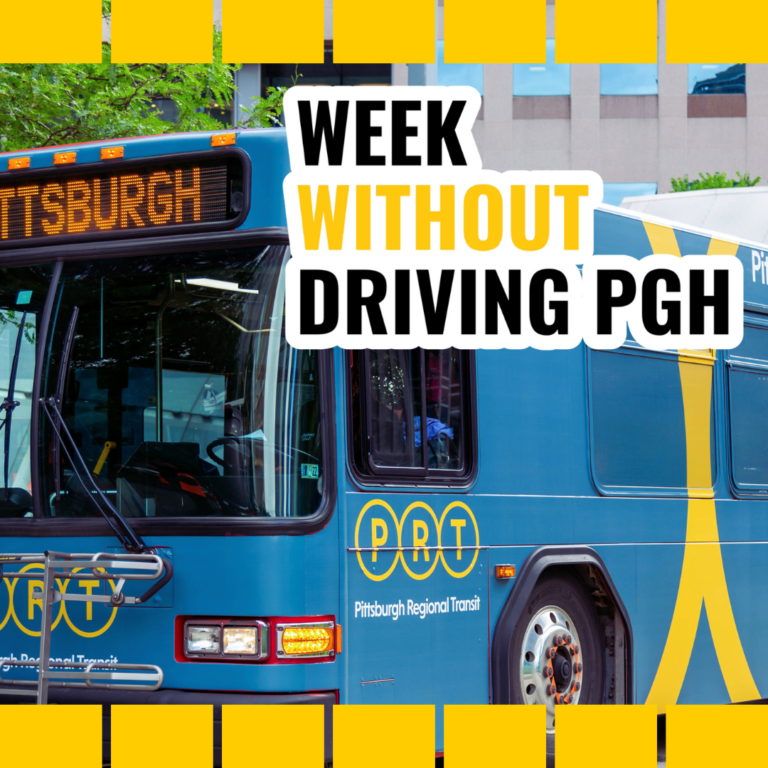
Access to food has multiple dimensions. Navigating not just what is available to you, but also what is accessible can be a complex challenge. Transportation is one key barrier for families that often determine access – or lack of access – to fresh food. This past week, Just Harvest’s Katherine Taylor took the pledge and participated in the Week Without Driving PGH.
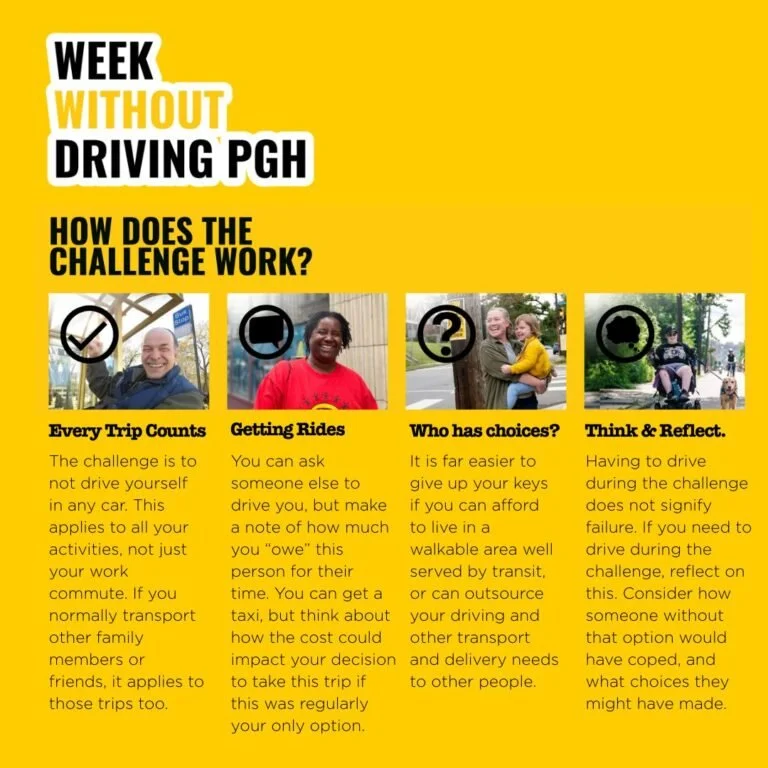
The movement began in 2021 by Anna Zivarts at Disability Rights Washington and is now led nationwide by America Walks and the National Campaign for Transit Justice. Locally, it is led by Pittsburghers for Public Transit, Access Mob Pittsburgh, BikePGH and Age-Friendly Greater Pittsburgh from September 29th through October 5th, 2025.
“With Pittsburgh Regional Transit’s proposed funding cuts, as well as our incomplete bike network, insufficient ACCESS services, and our region’s ever-evolving need for sidewalk improvements, the lack of investment in safe and accessible mobility options for non-drivers leaves too many residents stranded and struggling to access basic needs” (Pittsburghers for Public Transit).
Check out other local voices sharing their Week Without Driving stories here: https://weekwithoutdrivingpgh.org/spotlights/.
Reflections from Just Harvest’s Katherine Taylor, on their #WeekWithoutDriving:
Why is public transportation important for food access?
Transportation is one of the most important aspects of connecting communities to healthy and affordable food. 30% of people in Allegheny County do not drive, so public transportation is essential to connecting hundreds of thousands of people in our region to the resources they need to thrive.
Our Fresh Access Farmers Markets connect SNAP shoppers to affordable local produce – and public transportation is a wonderful resource to help folks reach farmers markets closest to them.
What surprised you during your week without driving?
While some bus stops have well-lit areas to sit, others may go un-noticed if not for a bus stop sign. Waiting for a delayed bus may mean standing for a long period of time – and in some cases, the walk to the stop itself can take a generous amount of time. Timing can be a bit unpredictable, so access to devices that can update you on waiting times is another important factor to consider. Having well funded transit is critical to increasing the number of routes in an area (meaning more/closer options of buses), and improved waiting areas.
I used to take the bus daily when I lived in San Francisco, and I forgot how much I missed it. There is something really wonderful about being around other people, and getting to just read or listen to music while on your way to work (or wherever you are headed)! I felt that although it may take more time to get from one place to another, it was time that I could utilize to feel more connected to myself and those around me. If you’re lucky, you might just even catch a nice chat with a stranger.
If you were to continue with no driving, what aspects of your life would change and how?
The major change I would anticipate is in my planning and structure of my time. I would have to account for more commute time, as well as how early or late my day can be, and how far I can go. During my week without driving, I found myself more hesitant to run errands or join social events in the evening – knowing I may be waiting alone for an undetermined amount of time, in unpredictable weather, and potentially home later than I planned.
Why is it important for everyone to experience a week without driving?
For those that do not have experience navigating life without driving, it is important to understand what options are available to our neighbors who rely on public transportation. Funding for transit is essential for people to access basic needs on a daily basis. It also serves as a point of connection for people to engage in culture and community. Access to transportation is often an ever-changing variable in most people’s lives – so it is important to advocate for adequate and reliable public transportation both for your neighbors, and for yourself.
If you didn’t get the chance to participate, we encourage everyone to take their own pledge and explore alternative modes of transportation for a week. Share your experience on social media to take action – and be sure to use #weekwithoutdriving to shed light on the nationwide movement.
